
Bath Table, Part 1
Plus introducing Fergy the Frog, and comparing wood personalities.

I wasn’t ready to get up today, but I did, making up for it by taking an afternoon nap halfway through drinking my coffee. We had to make 3 stops this morning before everyone closes at noon: the farmers market, kitchen store, and buying lumber for the next project. Yes, I was procrastinating. The neighborhood brewery, Thesis, sounded like a better choice yesterday than buying lumber.
This piece of oak will turn into a bathtub table, which I’m surprised isn’t a more common thing. I’ve wanted to make one for my house for a while now, but my own projects are many, and they rarely get attention. Who doesn’t want a table incorporated into the bath tub?
This short project will be finished up before getting back into the cabinet project.
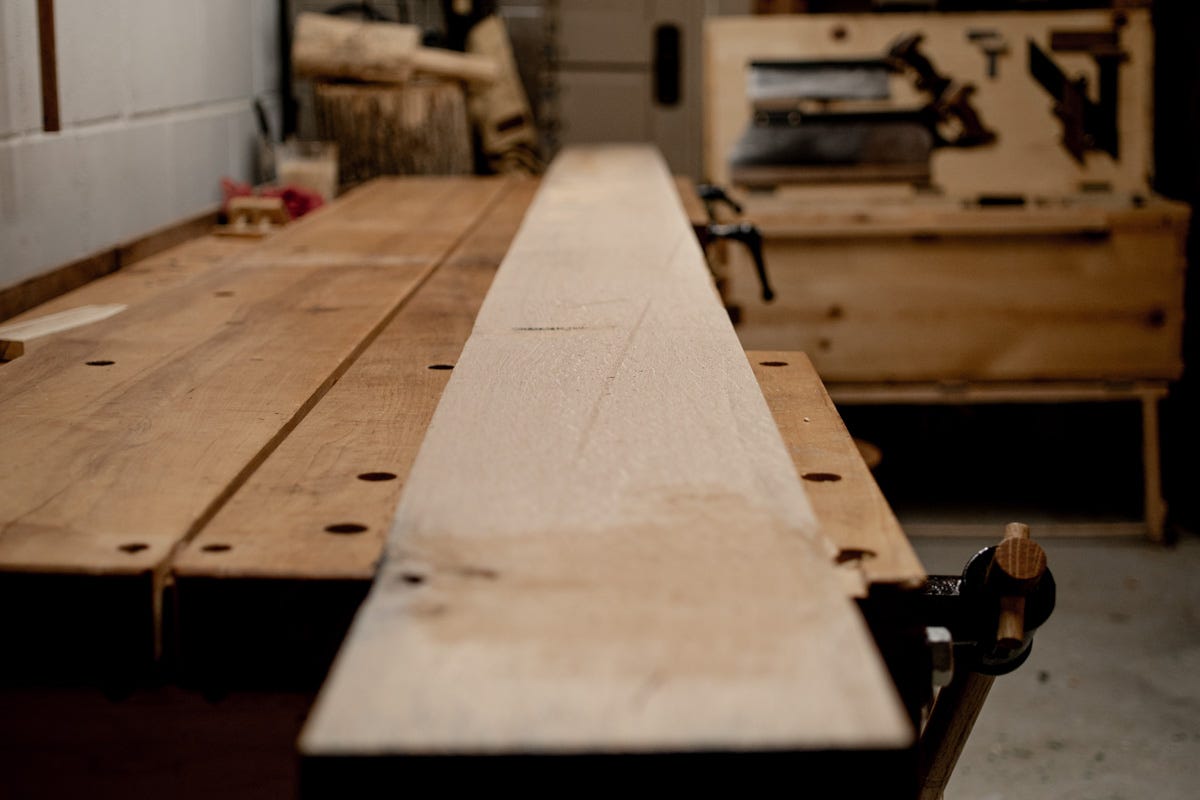
I bought one board.
This is quarter-sawn white oak, currently at $9 per foot. I don’t normally use expensive stuff like this unless the project needs it.
So much wood gets thrown out in the making process. So much more is thrown out in the milling process. Even more is thrown out when cutting quarter-sawn cuts.
I feel bad for the lumber yard, buying just one board, but also greatful that they are willing to sell just one board (at a slightly increased rate). It’s not easy running a business with small, 1-off sales, but also, I don’t have the space for storing a large collection of lumber, of various types, qualities, not to mention the scrap wood piles. Allowing smaller sales to me means I can sell smaller things to you.
Step 1 is sorting out the good bits and the bad bits. Kind of like tetris, but you have to find the bad parts first. I missed a bad part through the rough surface, but it worked out, using that section for the smaller pieces. The board was splitting at the end, which is quite common, but not something I want included in the finished piece. This portion will be thrown out. The other end had bigger knots than I like, so that was also thrown into the burn pile.
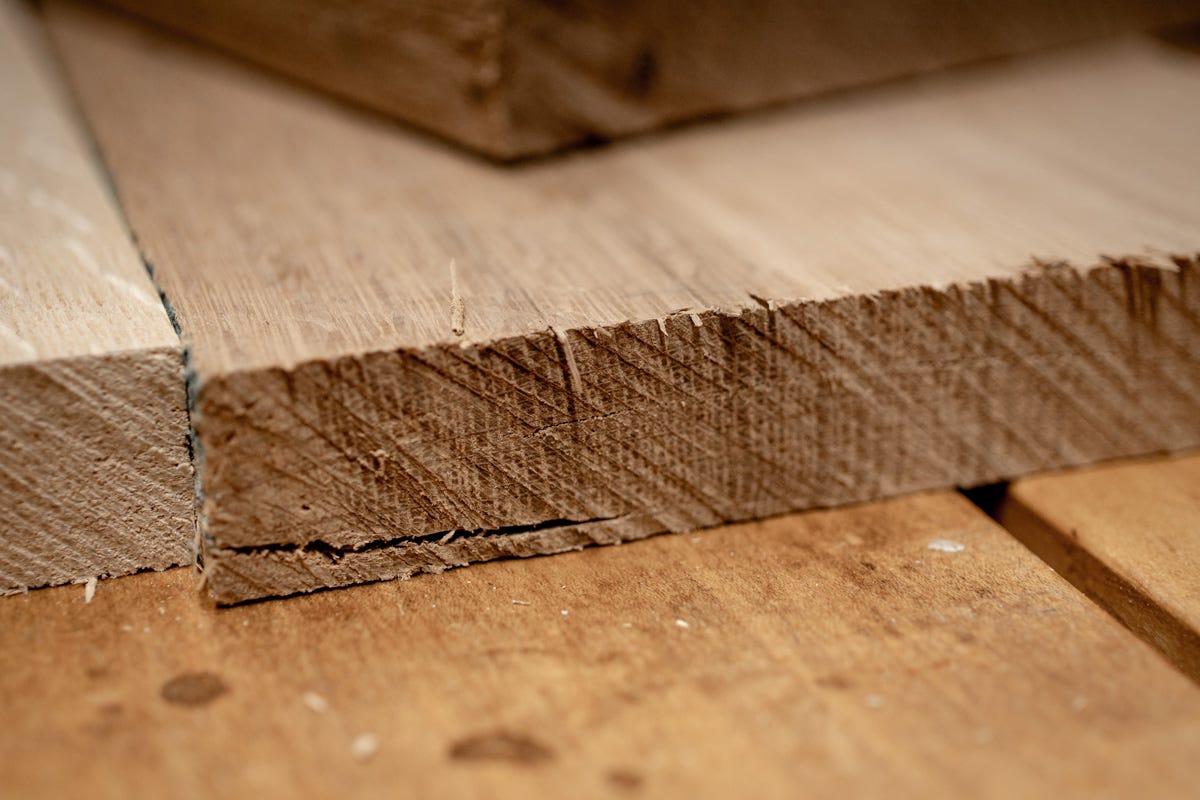
I don’t actually burn the entire burn pile. It’s used for scraps until the pile is too big to manage. Then, I’ll sort out the more crappy of the crappy stuff to burn. Scraps are used for shop supplies, requests for art projects, or when you need a random something to fit in this random place and this random piece is just right. Currently, I probably have 5 or 6 scrap piles. I think they are multiplying.
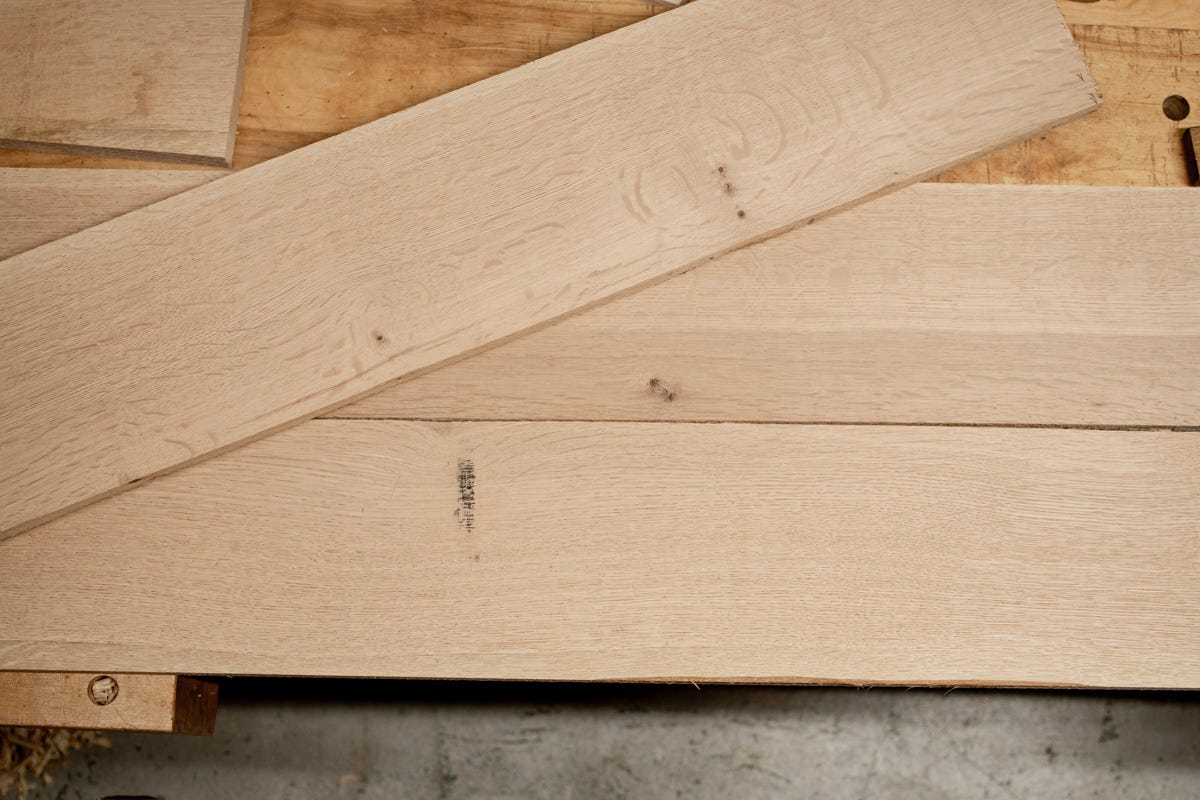
Below, boards cut to length, trying to figure out which ones to use, orientation, heartwood & sapwood direction, etc.
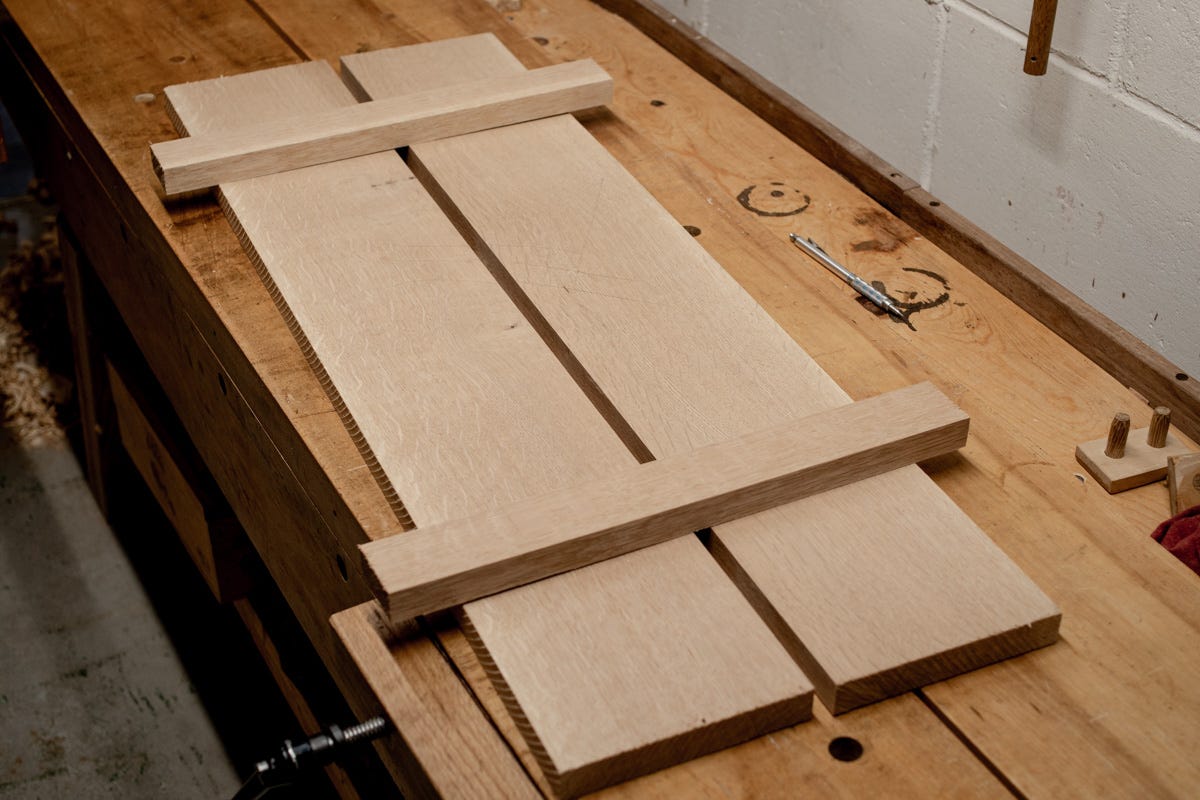
Here is the rough layout (shown upside-down). Each piece has been cut to size with relatively straight edges, ripped on the table saw and crosscut with the hand saw. The big pieces will be glued together, and the small pieces will be connected via sliding dovetail for both added stability and a “ledge” to prevent the table from sliding off the edge.
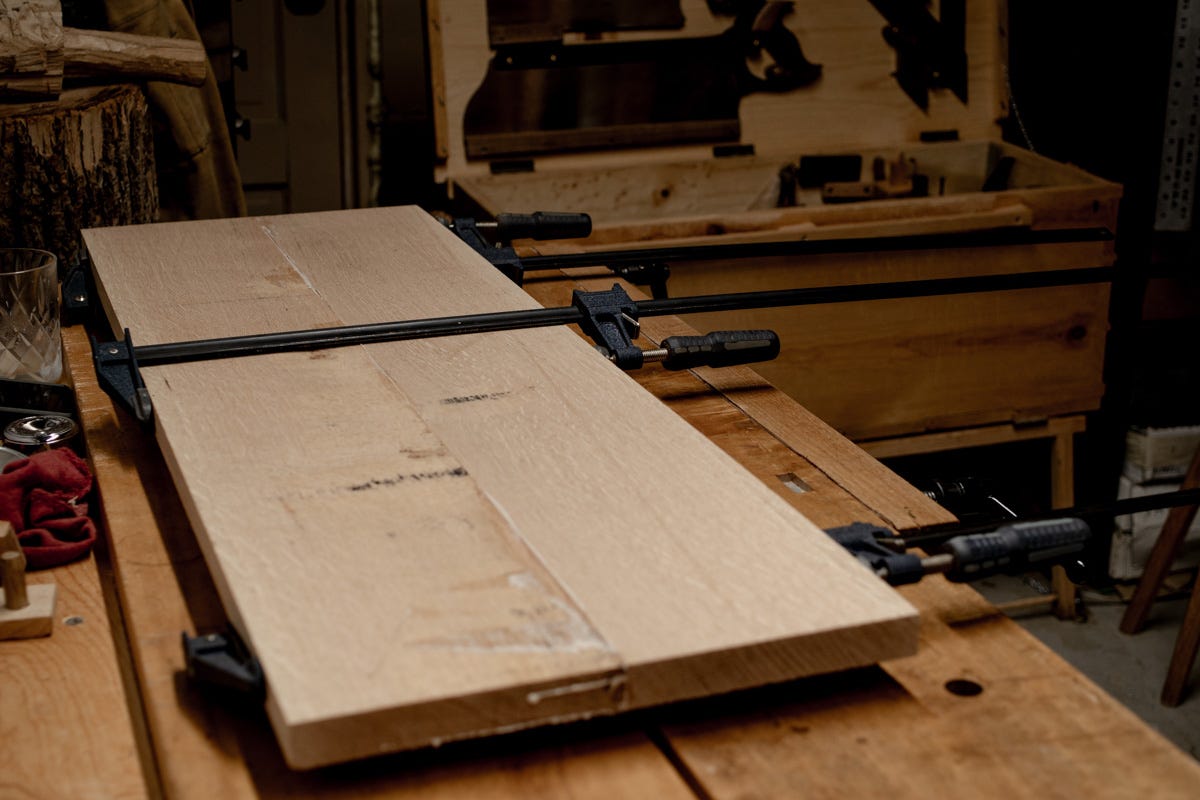
Finally, last major step for the day is gluing the boards together. From here, they sit for 24 hours before planing and joinery.
Many woodworkers plane the board before gluing them up. I don’t know why, unless it gets too wide to fit into a power planer. I do it this way for a few reasons:
The boards probably won’t match perfectly (thickness & straightness)
They aren’t stressed by forcing them to match
Biggest reason: I will probably screw up the alignment and have to plane it afterwards anyway. It will be more-perfect.
Oak has an interesting personality.
This is what I was thinking while sawing the boards:
Cherry is pretty, a little stubborn when I’m aggressively cutting in a way it doesn’t like, but looks and feels really nice when it’s all dressed up. Kind of like a pretty girl who gets upset when I roll down the window messing up her hair.
Pine is soft and weak, but stronger than many people think. The softness can be annoying if you beat it up, but super nice for squeezing together joins for a perfect fit. Its like the quiet person who is often misunderstood.
Oak is the hard-working professional. Hard, tough, strong, a little rough on the surface. I’m not sure if this is noticeable with power tools: oak cuts very nicely with hand tools, both saw and plane, considering its hardness, like it knows what it’s job is.
What’s next
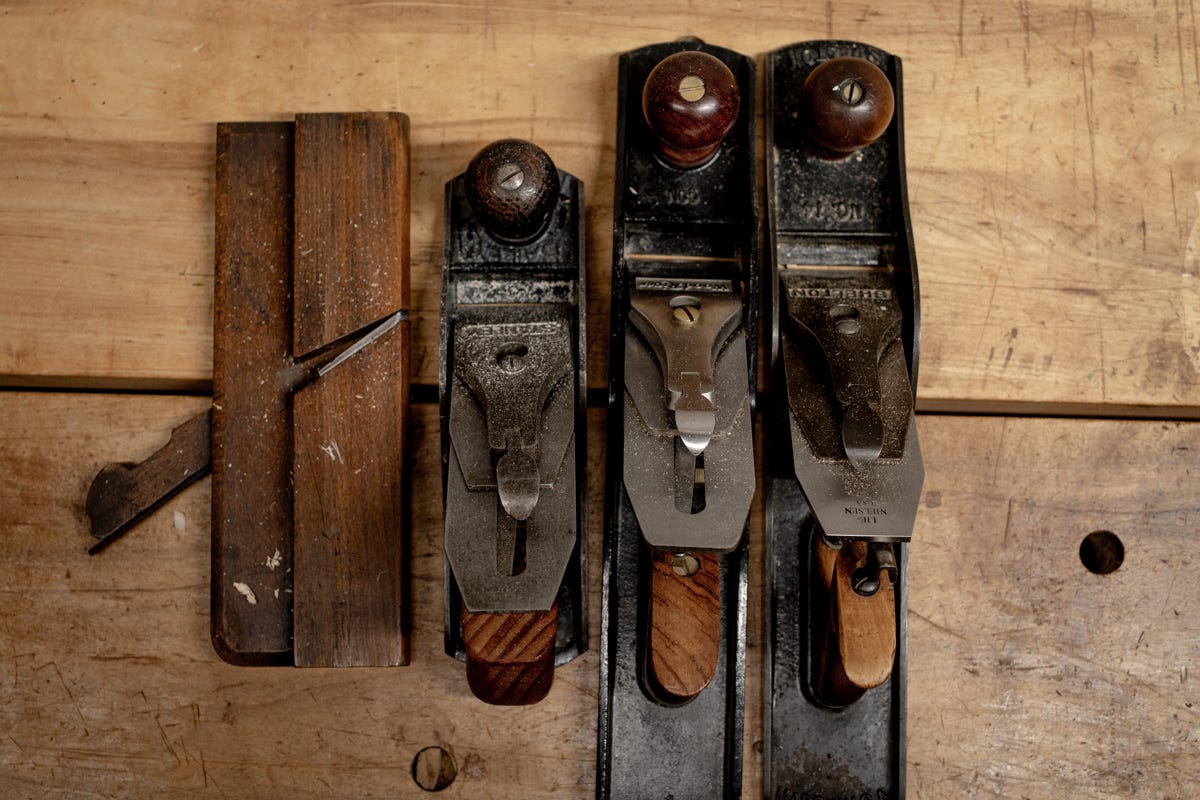
These tools have been waiting a while for sharpening, and with this oak project, sharpness is essential. I take it back. Sharpness is always essential, but for different reasons. And now, Tiffany needs kitchen knives sharpened before our cooking class tomorrow. I’m still not in the mood for sharpening. It requires focus, patience and good posture, three things I’m missing right now.
While typing, a new frog entered the pond and it’s being quite noisy. I built a raised, wooden pond last year, now with plants, goldfish, and the occasional frog. It has a new frog today (there’s an access ramp get in and out of the pond), but the one shown below jumped in the day after I filled it up this Spring, in early April.
I read that frogs sleep with their eyes open (because they don’t have eye lids) and this type, a leapard frog, typically sleeps through the day and goes exploring at night. I guess that means its taking afternoon naps in the pond. Its name is Fergy the Frog. Say hi Fergy.

